Technical guides · 19 October 2026 · 4 min read
Hot-dip galvanized or electro-galvanized? Choosing a cable tray finish
Hot-dip galvanizing applies a thick zinc coat to every surface after fabrication, electro-galvanizing is thinner and smoother. The wrong choice can leave a tray rusting within a few years.
Written by the Ponggawa technical team
Also available in: Bahasa Indonesia · 简体中文
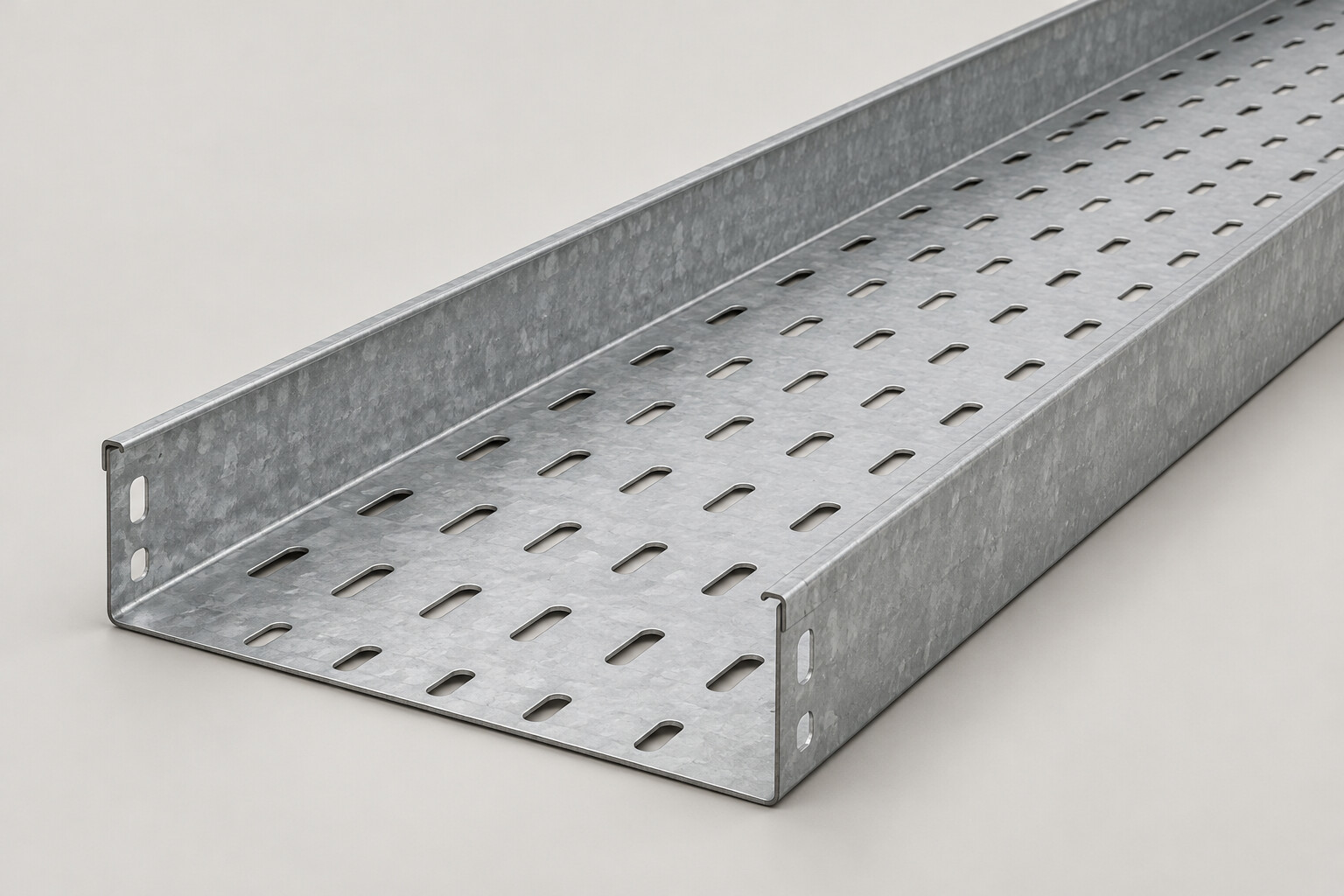
Short answer: choose hot-dip galvanized (HDG) for outdoor installations, humid areas, coastal sites, chemical plants, smelters and power plants. Choose electro-galvanized for dry indoor spaces such as office building ceilings, malls and panel rooms. Choose powder coating when a route needs an identification color or is visible in an exposed area.
For an industrial project in Indonesia, the finish deserves the same attention as the size: the wrong choice can leave a tray rusting within a few years. Smelters, chemical plants, power plants and every outdoor route fall under HDG in the table below, while electro-galvanized belongs in dry indoor spaces. Write the finish into the specification and the BOQ for every route, including the bolts and supports, so that all bidders quote the same thing.
How the processes differ
Hot-dip galvanizing means dipping the tray, after fabrication is complete, into molten zinc at about 450 °C. The zinc reacts with the steel to form an alloy layer that bonds firmly to it. Because the whole piece is dipped, cut edges, slot holes and the inside of bends are coated as well. The surface tends to be dull, with a zinc crystal pattern known as spangle.
Electro-galvanizing applies zinc by electrolysis. The coating is much thinner, the surface is smooth and bright, and the cost is lower. The weakness is that its corrosion resistance is also lower, especially when it is exposed to water or salt air.
Powder coating is a powder paint applied electrostatically and then baked. The color follows RAL codes, which makes it suitable for identifying routes, for example red for fire alarm.
When you write the specification, "hot-dip galvanized after fabrication" is the phrase that matters: it is what makes the cut edges and holes coated as well. Our guide to NEMA load classes and specifications lists the zinc coating thickness among the items to check in the specification.
Quick guide by location
Installation location | Recommended finish |
|---|---|
Ceilings of office buildings, malls, hospitals | Electro-galvanized |
Basements, pump rooms, humid areas | HDG |
Outdoor, rooftop, pipe rack | HDG |
Coastal sites, ports, shipyards | HDG, with HDG bolts as well |
Smelters, petrochemical plants, fertilizer plants | HDG, consider heavy-duty ladder |
Data centers | Powder coating or electro-galvanized |
Fire alarm routes | Red powder coating |
For smelters, petrochemical and fertilizer plants, consider heavy-duty cable ladder in HDG. The finish options for each product are listed on the cable tray and cable ladder pages.
Common mistakes on site
The mistake we see most often is HDG tray installed with electro-galvanized bolts. The bolts rust first and stain the tray around them. For outdoor and coastal areas, make sure the bolts, nuts, hanger rods and clamps have the same finish as the tray.
The second mistake is cutting HDG tray on site without repairing the coating. The cut edge loses its zinc protection, so apply zinc-rich paint after every cut. Put the bolt finish in the BOQ and the repair of cut edges in the installation method statement, so neither is left to chance on site.
The effect on cost
HDG needs an extra process after fabrication, so it costs more than electro-galvanized. For outdoor areas, however, that difference is far smaller than the cost of replacing trays that have rusted. State the finish you need for each route, including the bolts and supports, when you request a quotation.
Frequently asked questions
Can electro-galvanized cable tray be used outdoors?
It is not recommended. Electro-galvanized coating is much thinner and its corrosion resistance is lower, especially when exposed to water or salt air. For outdoor, rooftop and pipe rack routes, specify HDG.
Which finish should a data center use?
The location guide above recommends powder coating or electro-galvanized for data centers. Powder coating also allows colors to RAL codes, which helps to identify routes.
Do bolts and hanger rods need to be hot-dip galvanized too?
Yes, for outdoor and coastal areas. Electro-galvanized bolts on HDG tray rust first and stain the tray around them, so the bolts, nuts, hanger rods and clamps should all have the same finish as the tray.
What has to be done after cutting HDG tray on site?
Apply zinc-rich paint to the cut edge. Cutting removes the zinc protection at the edge, and the paint restores it.
Why does HDG cost more than electro-galvanized?
HDG needs an extra process after fabrication. On outdoor routes, the difference is far smaller than the cost of replacing trays that have rusted.