Technical guides · 19 October 2026 · 4 min read
NEMA VE 1 for cable tray and cable ladder: load classes explained
NEMA VE 1 is the reference most often written into technical specifications for metal cable tray on Indonesian projects. What it covers and how to read the load classes.
Written by the Ponggawa technical team
Also available in: Bahasa Indonesia · 简体中文
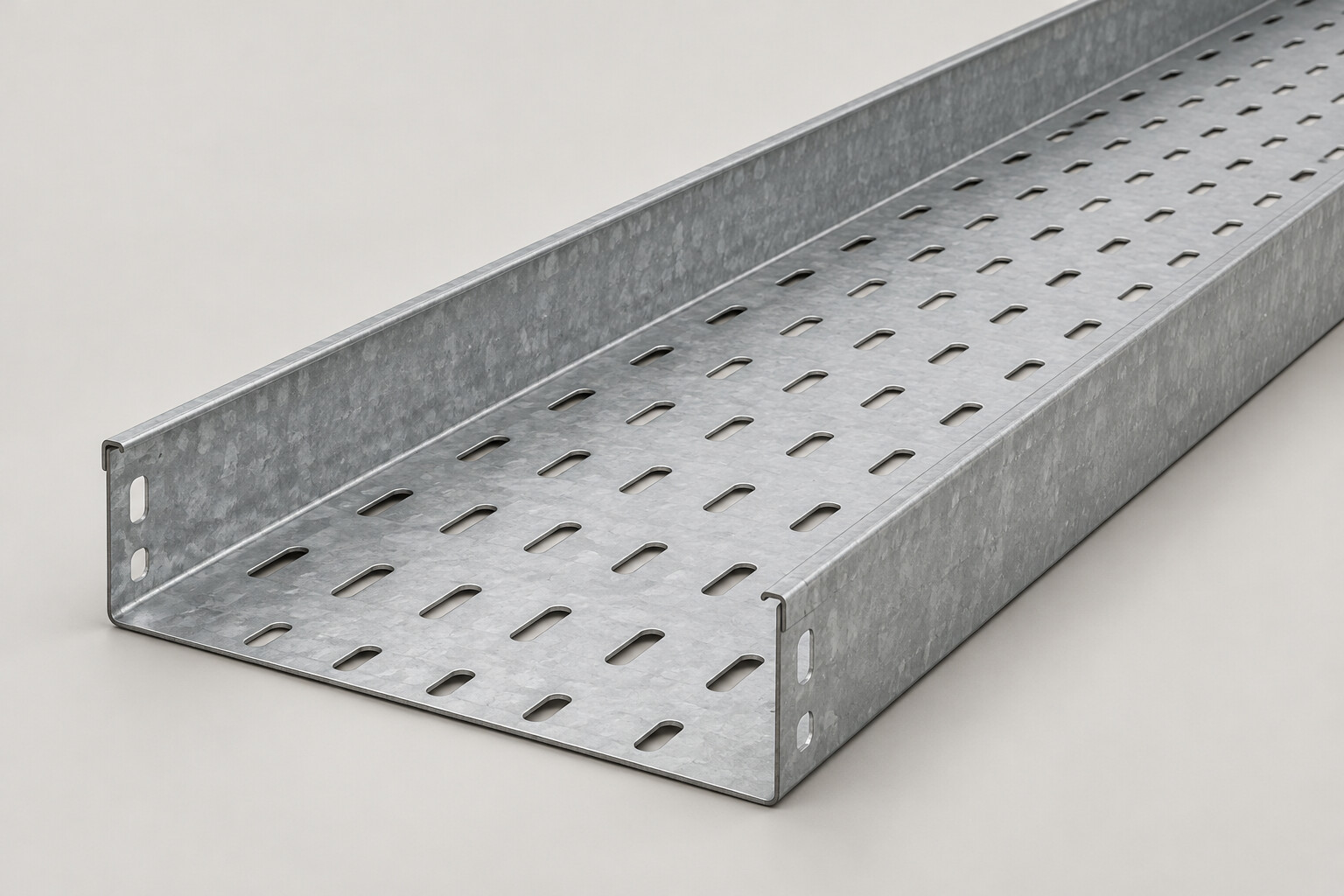
Short answer: NEMA VE 1 is the standard of the National Electrical Manufacturers Association for metal cable tray systems. It sets the load test method, the deflection limits and the load class classification, which is based on the support span and the working load. Project specifications in Indonesia often cite NEMA VE 1 together with IEC 61537 as references.
If your design team is used to one of the two standards, the practical point is this: Indonesian specifications often list both, so the load requirement has to be stated in a way every bidder reads the same. The checklist near the end of this article lists what to check in a specification before it goes out for quotation.
What NEMA VE 1 covers
- Load test method: the tray is installed over a defined span, loaded uniformly, and its deflection is measured.
- Deflection limit: the deflection under the working load must not exceed the set limit, which is generally expressed as a fraction of the span.
- Safety factor: the tray must carry a defined multiple of its rated working load (the safety factor) before it fails.
- Load class: a combination of support span and working load per unit length, for example class 10A, 12B or 20C.
The deflection limit and the support span work together on site. Our guide to cable tray support spacing shows how the span is chosen in practice and gives the figures of an independent laboratory load test.
How to read a load class
The number in the class is the support span in feet, and the letter is the working load category. Class 10A means a span of 10 feet (about 3 m) with load category A. The higher the number and the letter, the greater the capacity required.
As an example, the cable ladder type W, 1,000 mm wide and 100 mm high, that we supply was load tested in an independent laboratory over a 2.5 m span and classified as meeting NEMA VE 1 class 10A. Details of the type W profile are on the cable ladder type W page.
When a specification cites both NEMA VE 1 and IEC 61537
Many Indonesian project specifications name NEMA VE 1 together with IEC 61537. Both standards deal with load testing and classification of cable tray, but they express the requirement in different ways. When both are listed, ask the designer which one governs the load requirement, or state the load directly as cable load per meter and support spacing. That gives every bidder the same basis, and it lets the supplier choose the type, rail height and plate thickness to suit.
What to check in a project specification
- The load class required, or the cable load per meter and the support spacing.
- Material and plate thickness.
- Finish, and the zinc coating thickness for hot-dip galvanized (HDG) tray.
- Requirements for grounding and electrical continuity across joints.
Send the technical specification of your project when you request a quotation. We match the type, rail height and plate thickness to the load class required. For the choice of finish, see our guide to hot-dip galvanized and electro-galvanized finishes.
Frequently asked questions
What does NEMA class 10A mean?
The number is the support span in feet and the letter is the working load category. Class 10A means a span of 10 feet, about 3 m, with load category A. A higher number or letter means a higher capacity is required.
Do Indonesian projects specify NEMA VE 1 or IEC 61537?
Project specifications in Indonesia often cite NEMA VE 1 together with IEC 61537 as references. When both appear, agree which one governs the load requirement, or state the cable load per meter and the support spacing directly.
Has your cable ladder been load tested to NEMA VE 1?
Cable ladder type W, 1,000 mm wide and 100 mm high, was load tested in an independent laboratory over a 2.5 m span and classified as meeting NEMA VE 1 class 10A. The test figures are given in our article on cable tray support spacing. For other types and sizes, send the load class your project requires.
What should I send to get a quotation that meets the load class?
Send the technical specification with the load class, or the cable load per meter and the support spacing. Add the material and plate thickness, the finish with the zinc coating thickness for HDG, and the grounding and continuity requirements. We match the type, rail height and plate thickness to that load class.