Comparisons · 19 October 2026 · 4 min read
Cable duct (trunking) or cable tray? Differences and how to choose
Cable duct is fully enclosed with no holes, cable tray is perforated and open. Protection goes up with a duct, but heat dissipation goes down. Here is what to take into account.
Written by the Ponggawa technical team
Also available in: Bahasa Indonesia · 简体中文
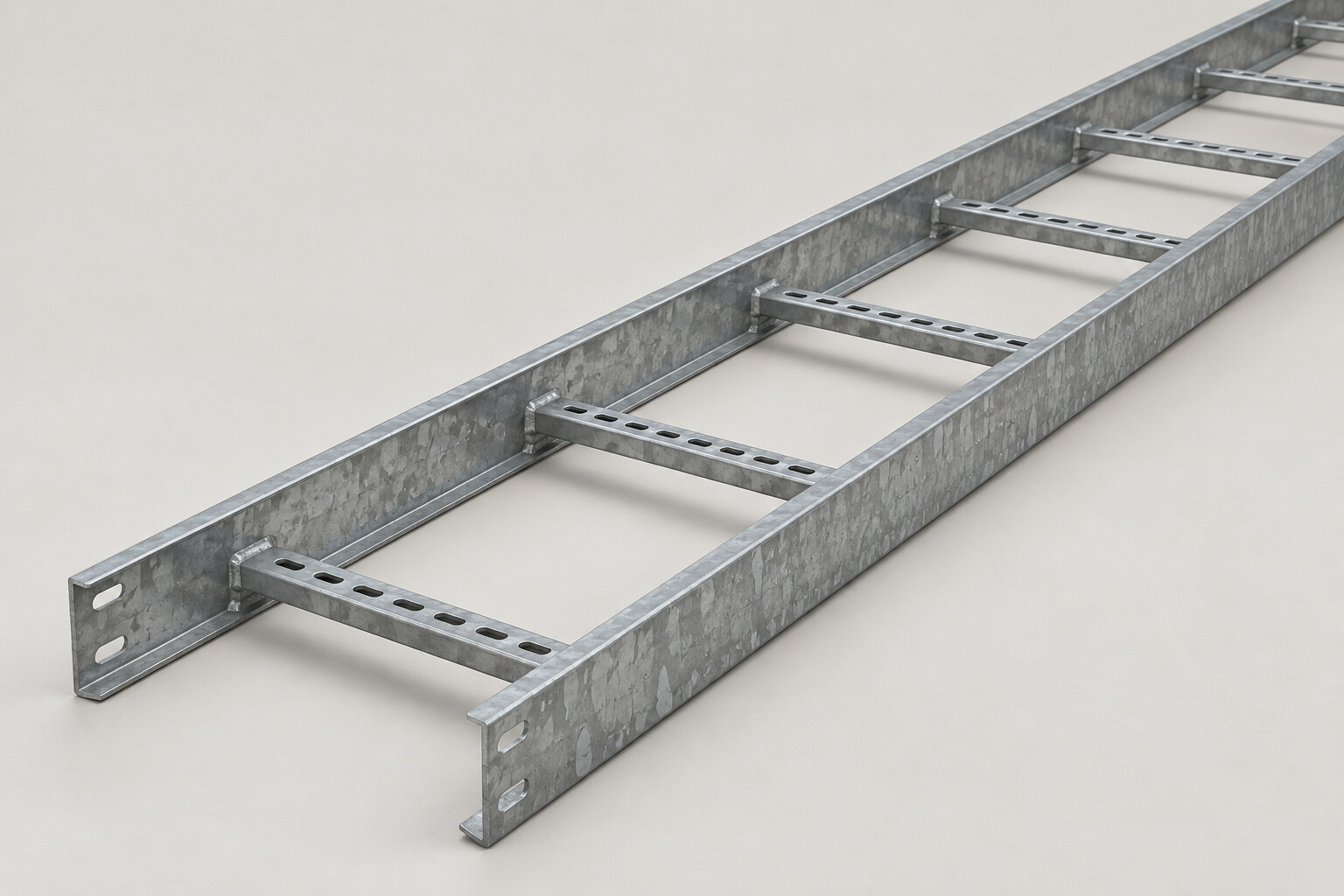
Short answer: a cable duct (trunking) is a steel trough without holes, closed with a cover, that protects cables from dust, water splashes and impact. A cable tray is perforated and usually open, so the cables can release heat more easily. Choose duct for dusty areas, exposed routes and the separation of data cables. Choose tray for power cable routes that need cooling.
Cable duct is the name used on this site; specifications written to IEC or British practice call the same product cable trunking, and the closest NEMA equivalent is a solid bottom tray with a cover. Whatever the name in your specification, the decision is a trade-off between protection and heat dissipation, and it affects the electrical design as well as the containment.
Key differences
Aspect | Cable duct (trunking) | Perforated cable tray |
|---|---|---|
Perforation | None | Slotted holes in the base |
Cover | Standard | Optional |
Protection against dust and water | High | Low without a cover |
Heat dissipation from the cables | Low | Good |
Access to add cables | Open the cover | Direct |
Impact on cable current-carrying capacity
Cables inside a closed duct release heat more slowly, so their current-carrying capacity has to be corrected downward compared with the same cables in an open tray. For power cables, this can mean moving up one cable size in cross-section.
In practice this belongs in the cable sizing calculation, not only in the containment BOQ. In IEC based designs the correction follows from the installation method used in the calculation. Discuss it with the electrical designer before you replace tray with duct on a power route, because a change made late, for example during value engineering, can change the cable schedule as well.
When cable duct is the better choice
- Cement plants, textile plants and other areas where dust builds up easily.
- Routes that are exposed in public areas and need to look tidy.
- Data and control cables that must be physically separated from power cables.
- Routes under work areas where objects may fall onto the cables.
Sizes and finish options are on the cable duct product page.
When an open perforated tray is the better choice
Choose a perforated tray for power cable routes that need cooling. The slotted base lets heat escape, so the cables keep their rating without the correction a closed duct requires. The open top also gives direct access when cables are added later, without removing covers along the route.
A tray can still take a cover where part of a route needs protection, since the cover is optional rather than standard. See the sizes on the cable tray product page, and our comparison of cable tray and cable ladder for the heavier power routes.
To get comparable quotations, state for each route whether it is duct or tray, whether a cover is required, and the finish. For mixed plants, list the dusty or exposed areas that need duct and the power routes that stay on open tray, so the electrical designer and the supplier work from the same assumption. Send the layout or BOQ through our quotation request form and mark the routes that need duct.
Frequently asked questions
Is cable trunking the same as cable duct?
Yes. Both names describe an enclosed steel trough without perforation, closed with a removable cover. Cable duct is the term used on this site, trunking is the term used in IEC and British practice.
Can I replace cable tray with cable duct on a power route?
Only after the electrical designer has checked it. Cables in a closed duct release heat more slowly, so their current-carrying capacity has to be corrected downward, and the cable size may have to go up one step. Make the decision before the cable schedule is fixed.
Can cables be added to a cable duct later?
Yes, by opening the cover. A perforated tray without a cover gives direct access, which is quicker on routes where cables are added often.
Which areas of a plant call for cable duct?
Areas with dust that builds up easily, such as cement and textile plants, routes exposed in public areas, data and control cables that must be physically separated from power cables, and routes under work areas where objects may fall.