Comparisons · 19 October 2026 · 3 min read
Cable tray type C vs type U: which side wall profile to specify
Both are perforated trays in the same sizes, but the side walls are formed differently. This is how the profile affects stiffness, suitable widths and price level.
Written by the Ponggawa technical team
Also available in: Bahasa Indonesia · 简体中文
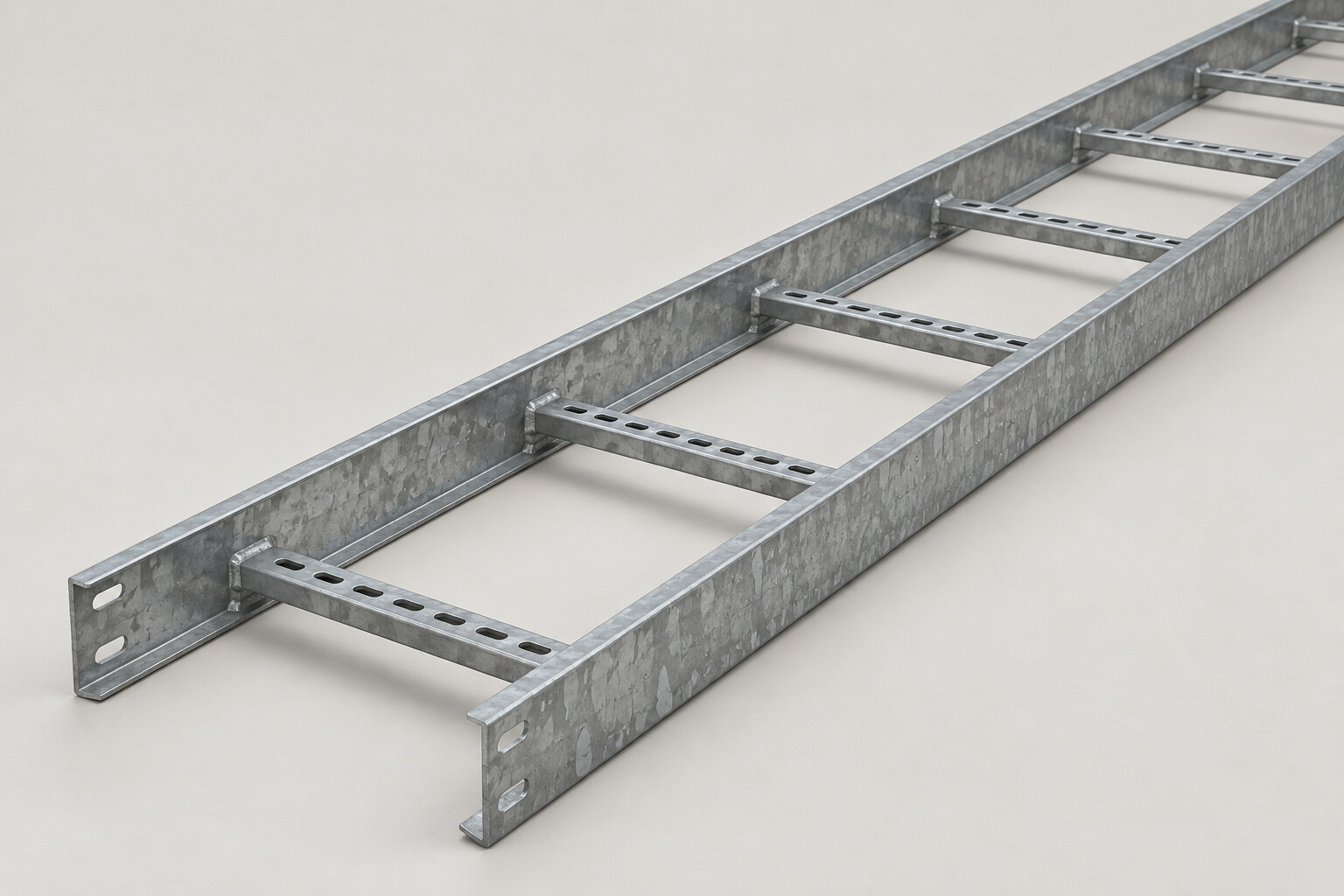
Short answer: type U has straight side walls with a small inward lip, while type C folds the side walls into a stiffer C profile. Up to 300 mm wide, type U is adequate. For widths of 400 mm and above, or for longer support spacing, type C adds the extra stiffness.
Type U and type C describe the shape of the side wall, not a load class. Both are perforated (ventilated) trays with the same sizes and the same joints, so on a drawing or BOQ the profile should be stated next to the width, height, plate thickness and finish. If your specification gives a load class, read our guide to NEMA load classes for what else has to match it.
The cross-section
On type U, the side walls rise straight up from the base with a small fold at the top. The shape is simple and light, and it is the type most commonly used in buildings.
On type C, the top edge of the side wall is folded inward and then downward to form a C profile. This double fold makes the top edge stiffer, so the wall does not bend easily when cables are pulled in or when a technician leans on it during installation.
The difference matters most on wide trays and on routes with longer support spacing, which is why the selection below is based on width and spacing.
Comparison
Aspect | Type U | Type C |
|---|---|---|
Edge stiffness | Standard | Higher |
Suitable widths | 100 to 300 mm | 300 to 1,000 mm |
Price level | Slightly lower | Slightly higher |
Join set compatibility | Same | Same |
The price difference between the two is relatively small. For a cable tray 400 x 100 route, for example, ask for type U and type C in the same quotation and compare them line by line. Both profiles are on the cable tray product page, with the details of type U and type C.
How to choose for your project
- Width up to 300 mm: type U is adequate, and it is the usual choice for building services routes.
- Width of 400 mm and above: specify type C for the stiffer top edge.
- Longer support spacing: type C, because the stiffer profile helps where the supports are further apart.
Support spacing itself is covered in our guide to cable tray support spacing.
Can the two be mixed?
Yes. The splice holes and join sets of both types are the same, so one project can use type C on the wide main routes and type U on the narrower branch routes. This keeps the stiffer, slightly more expensive profile where it does the work and the lighter profile everywhere else.
Frequently asked questions
Which type should I specify for a 300 mm wide tray?
Up to 300 mm wide, type U is adequate. Consider type C when the supports on that route are spaced further apart than usual, since the stiffer profile adds rigidity at the top edge.
Is type C stronger than type U?
Type C has a stiffer top edge because of its double fold. The side wall bends less easily when cables are pulled in or when a technician leans on it. For wide trays of 400 mm and above, that extra stiffness is the reason to choose it.
Can type U and type C be joined on the same route?
Yes. Both types have the same splice holes and use the same join sets, so a type C length connects to a type U length with a standard join set.
How much more does type C cost than type U?
The price of type C is slightly higher and the difference is relatively small. Ask for both types in one quotation so you can compare them for your sizes and quantities.